

Sh. Fahd ibn al-ʿAlā'
Instructor
12
courses
Shaykh Fahd was raised in the United Arab Emirates. There, he completed his studies of the Qur'an and Arabic with local teachers. He later moved to Canada with his family, and from there he formally began his path towards learning the sacred sciences.
Education
His pursuit of knowledge has taken him to different parts of the Middle East, Asia and Africa, learning and benefitting at the feet of Muslim scholars -- while preserving both the traditional understanding [dirāyah] and transmission [riwāyah] of sacred knowledge -- from the direct students of:
• Sh. Muhammad Nūr ibn Sayf al-Muhayrī (d. 1402) [United Arab Emirates]
• Sh. Husayn ibn Muhammad al-Zawwāk (d. 1384) [Yemen]
• Sh. Hasan ibn Muhammad al-Mashshāt (d. 1399) [Saudi Arabia]
• Sh. Abū al-Khayr al-Maydānī (d. 1380) [Syria]
• Sh. Muhammad Rāghib al-Tabbākh (d. 1370) [Syria]
• Sh. Muhammad Badr al-Dīn al-Hasanī (d. 1354) [Syria]
• Sh. Abū Sa`īd Sharaf al-Dīn al-Dihlawī (d. 1381) [India]
• Sh. Muhammad Idrīs al-Kānadihlawī (d. 1394) [Pakistan]
• Sh. Muhyī al-Dīn Abd al-Hamīd (d. 1392) [Egypt]
• Sh. Muhammad al-Hāfiz al-Tījānī (d. 1398) [Egypt]
• Sh. `Abd al-Hayy al-Kattānī (d. 1382) [Morocco]
• Sh. Muhammad al-Tāhir ibn `Āshūr (d. 1393) [Tunisia]
• Sh. Muhammad al-`Arabī ibn al-Tabbānī (d. 1390) [Algeria]
He has formally covered, under the tutelage of expert scholars, advanced writings on various sciences, such as:
Arabic syntax [nahw], morphology [sarf], philology [lughah], rhetoric [balāghah], composition [inshā'], prosody [`arūd], history [tārīkh]
• Qur'ānic recitation [tajwīd], variant readings [qirā'āt], exegesis [tafsīr], its principles [usūl al-tafsīr]
• Islamic jurisprudence [fiqh], principles of jurisprudence [usūl], legal maxims [qawā'id fiqhiyyah], inheritance [farā'idh]
• Islamic logic [mantiq], philosophy [falsafah], ratio legis [maqāsid], Islamic theology [`aqīdah], methodology [manhaj], devotion [sulūk]
• Prophetic traditions/narrations [hadīth], nomenclature [mustalah], narrator-criticism [rijāl] and latent defects [`ilal].
Formal Authorization
He has the authority to teach and transmit hadīth compilations through recital [qirā'ah] and aural [samā`] modes. He has also been granted formal authorization [ijāzah] from about 500 scholars from different corners of the world. In Qur'ānic readings [qirā'āt], he has attained formal authorization [ijāzah] from scholars with the shortest chains in the ten minor readings [al-ʿashr al-sughrā] and the ten major readings [al-ʿashr al-kubrā], as well as the rare and uncommon four readings [al-arbaʿ al-zawā'id ʿala al-ʿashr].
Writings
He has authored multiple writings, both in prose and poetry. These include:
• Sharh ʿIlal al-Tirmidhi: A comprehensive Arabic commentary on the shorter work of al-Tirmidhi (d. 297) discussing the latent defects found in hadith transmission.
• Nihāyah al-Rahw: A commentarial work comprising of critical notes on the popular manual on Arabic syntax, Hidāyat al-Nahw or al-Hidāyah fi al-Nahw. This writing exposes students to the errors, disproved rules and minority views that are found in the text as expounded by grammarians after Ibn al-Hajib (d. 646).
• Kashf al-Dakhā wa al-Ribah: A didactic versification on the instances wherein backbiting is deemed permissible in Islamic law. This work is the most extensive exposure to the topic, surpassing the versifications of al-Aqfahsi (d. 808), al-Haskafi (d. 1088) and Ibn `Abidin (d. 1252). A commentary on the text is also in the works.
• Urjuzah fi Man Tafaqqah wa Ankar ʿala Kutub al-Fiqh: A 45-line poem in Arabic that versifies the responses of al-Shams al-Saffarini (d. 1188) and al-Shihab al-Manini (d. 1172) on the topic of studying the books of Islamic jurisprudence and claiming independent reasoning.
• Washā'ih al-Ghāwani: An Arabic didactic versification focusing on all facets of Arabic rhetoric [balāghah], semantics [bayān] and ornamentations of speech [badi`] that are found in Surah al-Fatihah. This work does not have a precedent in Islamic literature.
• I'tilāf Dhawi al-Nuhā: A unique didactic poem in Arabic on the commentary [tafsir] of the verse of the Qur'an: "...Except that you speak in a recognizably good manner..." [2:228].
Member since February 2022
Courses reviews
All ratings
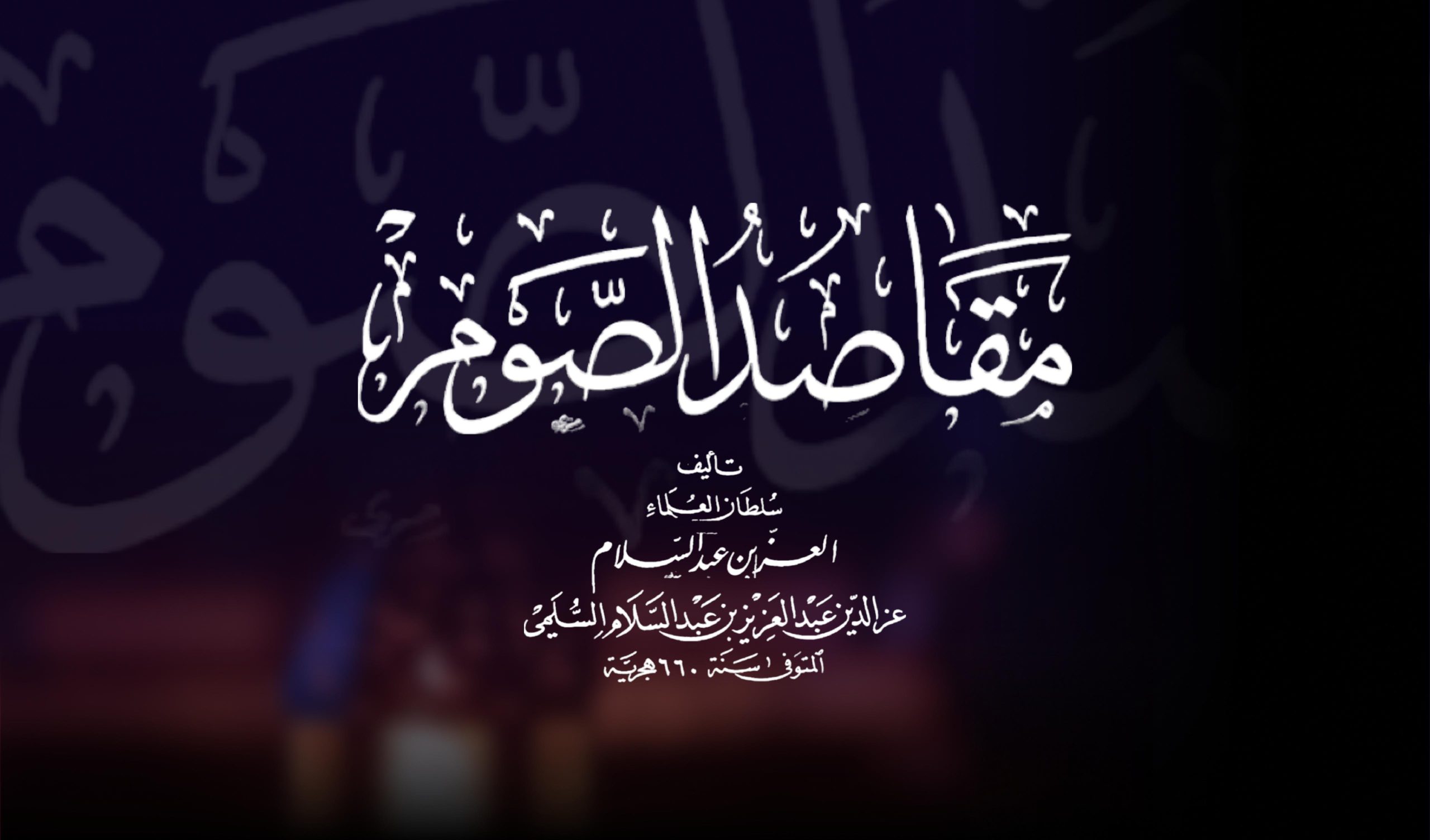
The Objectives of Fasting (Maqāṣid al-Ṣawm)
The Objectives of Fasting (Maqasid Al-Sawm) by Izz Al-Din Ibn Abd Al-Salam is a scholarly work that explores the underlying obj...
Saffarini’s Critique of the Detractors of the Four Schools
A course on the al-Saffarini’s 12th century Arabic treatise critiquing those who negate the validity of practice according to t...

Qurrat al-ʿAyn [Commentary on al-Waraqat]
“Qurrat Al-Ayn” is an introductory commentary on Imam al-Haramayn’s famous “al-Waraqat,” focusing on Usul al-Fiqh. The work aim...

The Bayquniyyah (Intensive)
A short course on the Bayquniyyah poem on Hadith Terminology with three segments: Translation, Explanation & Textual Breakdown
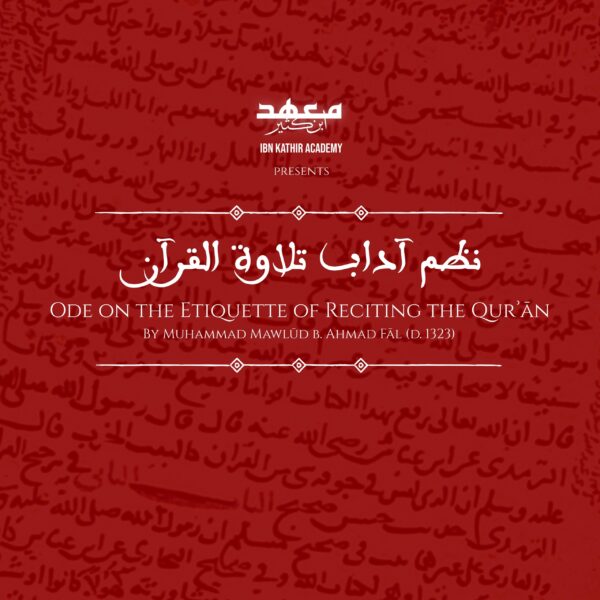
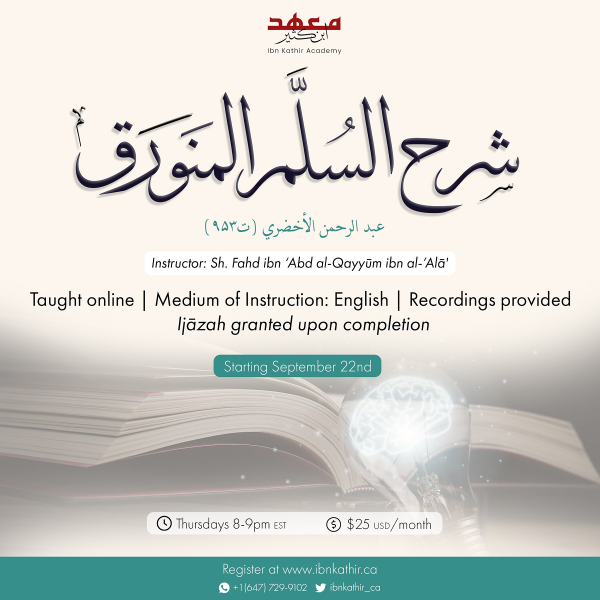
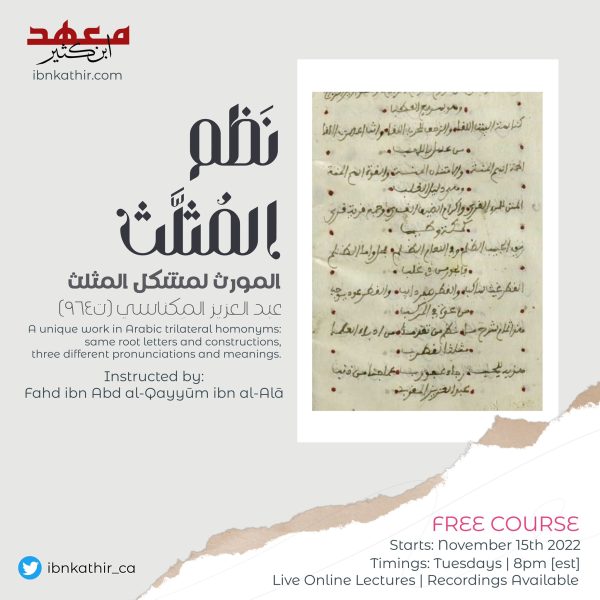
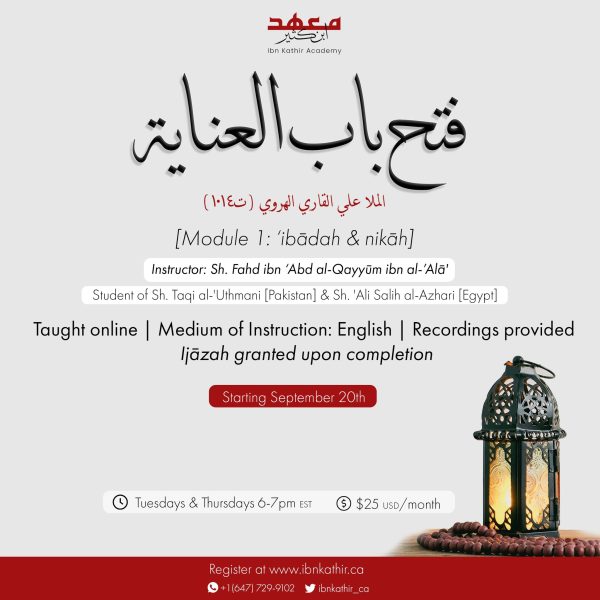
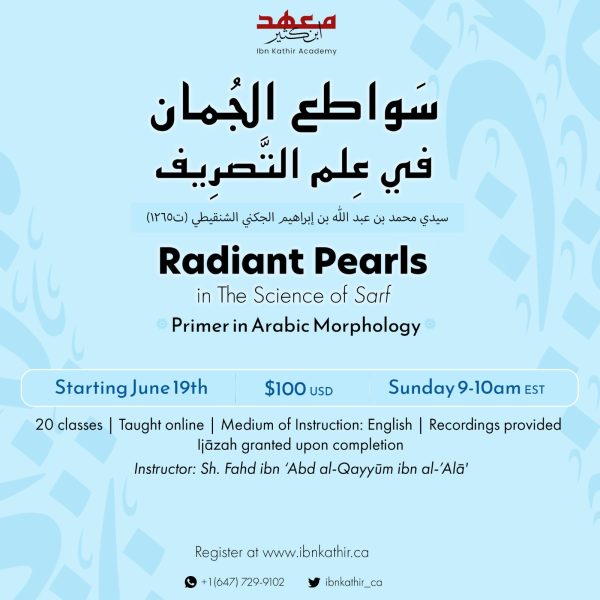
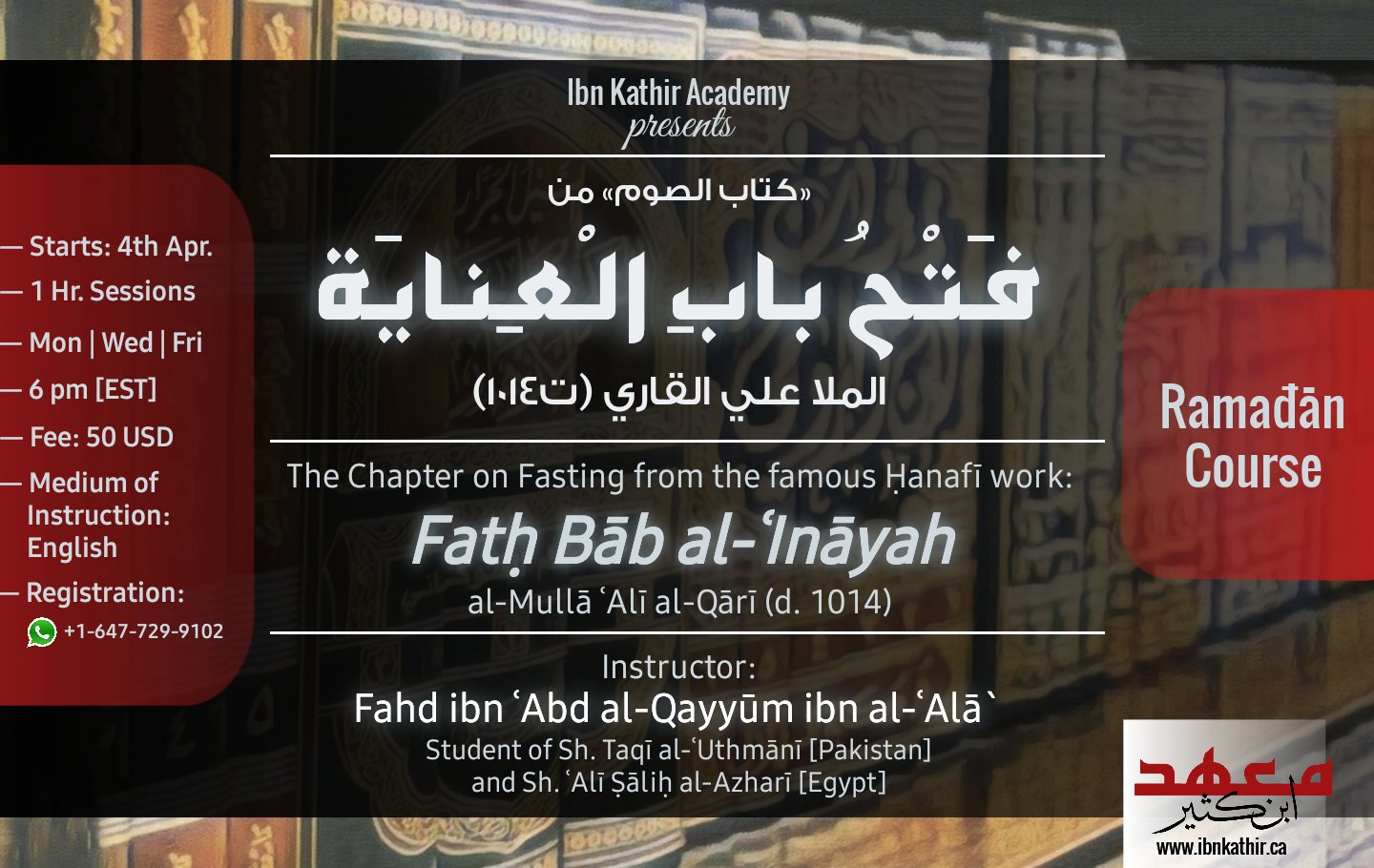
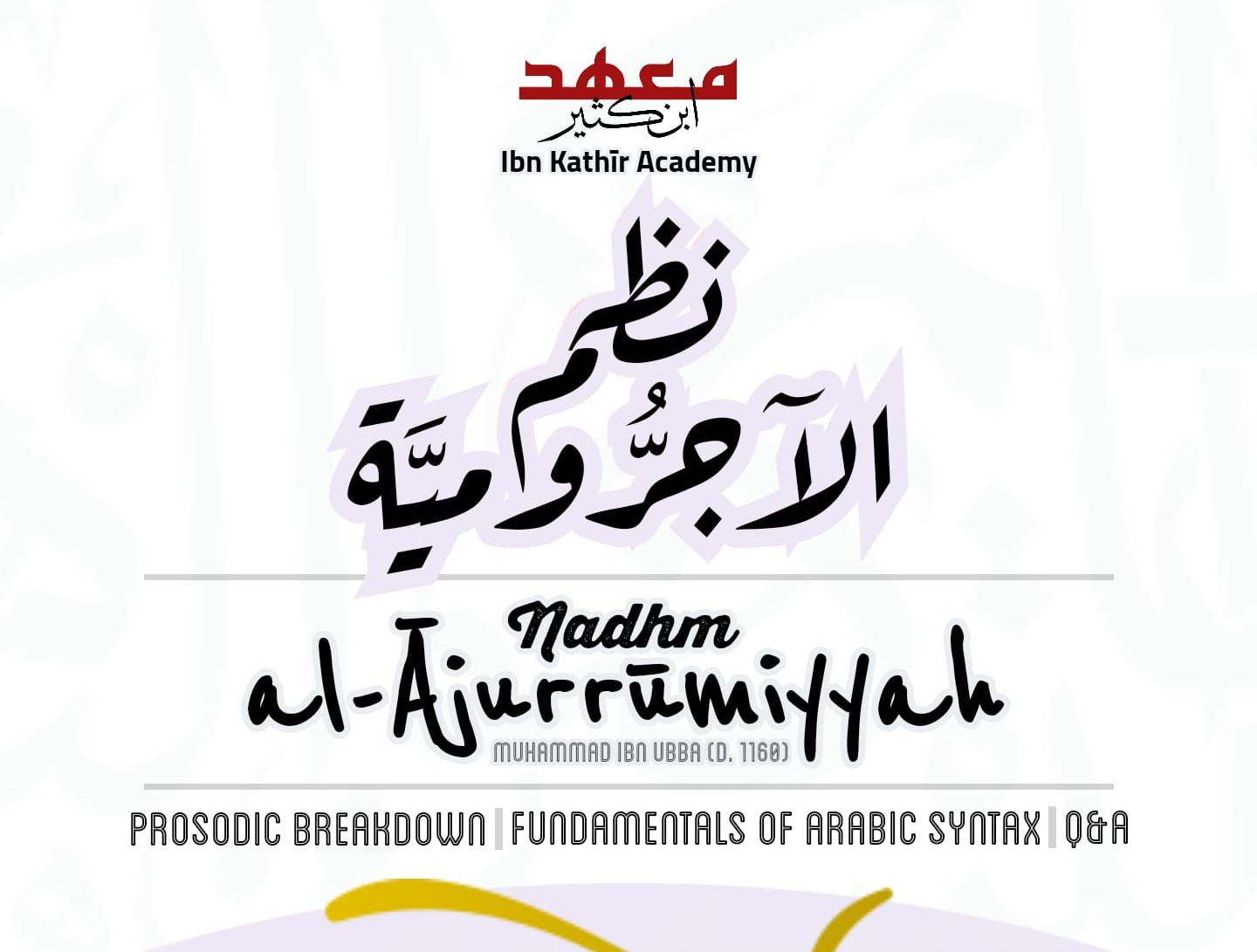
The Ajurrumiyyah Poem I
Learn Arabic Grammar (Syntax) by studying the classical Ajurrumiyyah Poem by the Mauritanian Grammarian Ibn Ubbah (d. 1168), wi...

Forty Narrations on Comprehensive Words
Cover the Forty Ḥadīths on Comprehensive Words (Jawāmiʿ al-Kalim) by the 11th Century scholar ʿAlī al-Qārī (d. 1014), with disc...
Nothing to show yet